
What is colour temperature?
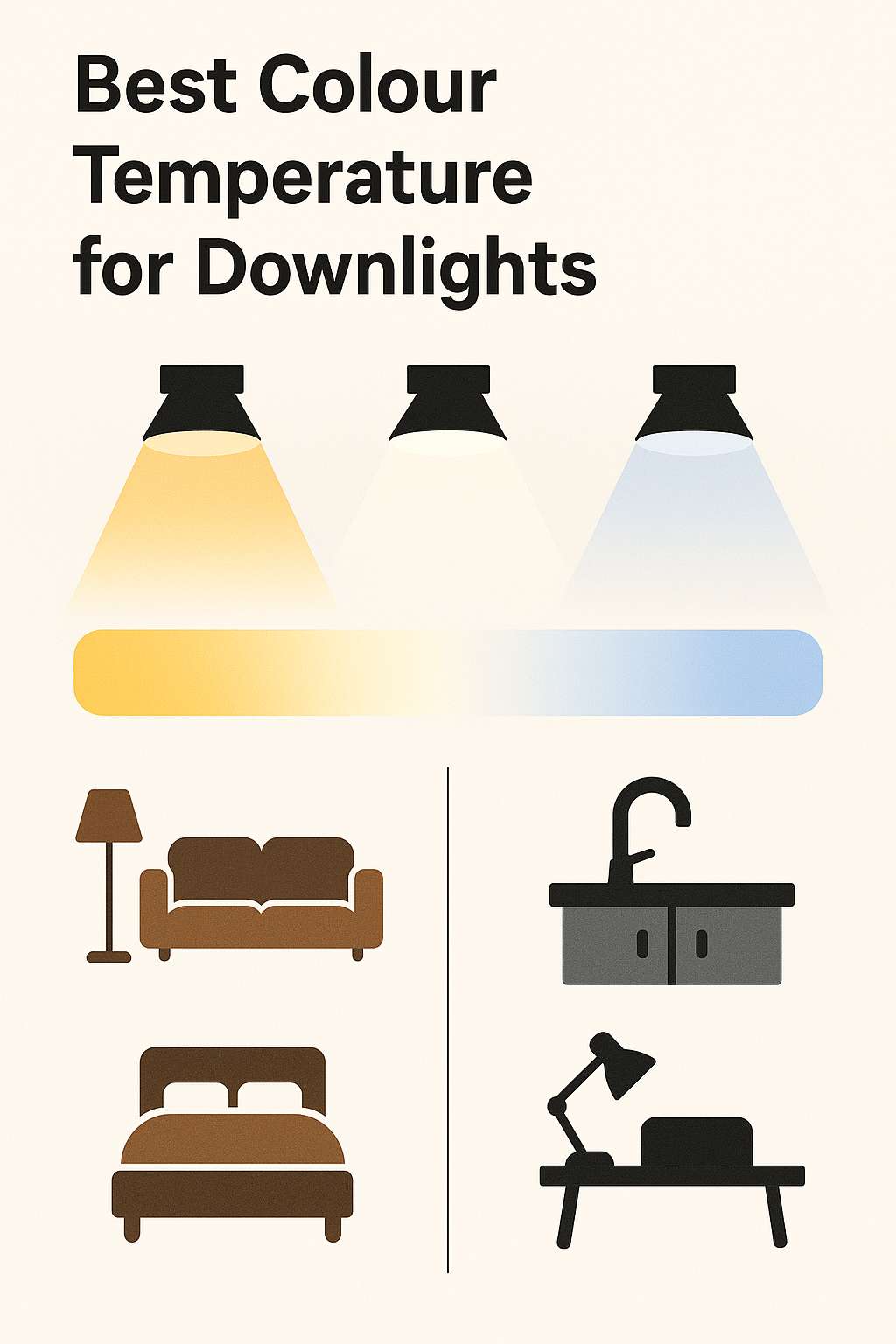
When you choose LED lamps for your downlights, you’ll usually see a number like 2700K, 3000K or 4000K on the box. This is the colour temperature, measured in kelvin (K), and it describes how “warm” (yellow) or “cool” (blue) the light looks.
- Lower numbers (2200–2700K) → very warm, cosy, similar to old halogen or incandescent bulbs.
- Mid range (3000K) → warm white, still comfortable but a little clearer and crisper.
- Higher numbers (4000K+) → cool white or daylight, more neutral and “fresh”.
Your choice won’t change how bright the lamp is in lumens, but it will completely change how the room feels.
Quick guide: best colour temperature by room
Here’s a simple rule-of-thumb for most UK homes:
- Living rooms & bedrooms → 2700–3000K (warm white)
- Hallways & landings → 2700–3000K (warm white)
- Kitchens → 3000–4000K (warm to neutral white)
- Bathrooms → 3000–4000K (neutral, clean but not harsh)
- Home offices & utility rooms → 4000K (cooler, more focused)
If you’re unsure, 3000K warm white is a very safe middle ground for most spaces.
Warm white (2700–3000K): cosy and relaxed
Where it works best
Warm white is ideal for:
- Bedrooms and living rooms where you want a softer, more relaxing feel.
- Hallways and landings that connect to these spaces.
- Period properties or rooms with warm finishes (wood, beige, terracotta tones).
It helps skin tones look natural and doesn’t make walls feel stark or clinical.
Pros
- Comfortable on the eyes in the evening.
- Hides slight imperfections in walls and ceilings better than cooler light.
- Works well with dimming for a “hotel-style” feel.
Cons
- Can feel a bit too warm in modern, very white kitchens and bathrooms.
- Makes pure white tiles and worktops look slightly cream.
Cool white / neutral white (4000K): crisp and practical
Where it works best
Neutral or cool white is popular for:
- Modern kitchens with white or grey cabinets and worktops.
- Bathrooms where you want a clean, bright feel.
- Utility rooms and home offices where you need to see detail clearly.
Pros
- Helps spaces feel brighter and more “awake”.
- Great for task areas such as kitchen worktops and bathroom mirrors.
- White surfaces look crisp and clean.
Cons
- In living rooms and bedrooms it can feel a bit cold or “office-like”.
- Can highlight every mark or imperfection on walls and ceilings.
Mixing colour temperatures in one home
You don’t have to use the same colour temperature everywhere. In fact, most homes work best with a mix:
- Warm white (2700–3000K) in bedrooms, lounges and softer living spaces.
- Neutral white (3000–4000K) in kitchens and bathrooms.
What you should avoid is mixing two different colour temperatures within the same ceiling area. If half your downlights are 2700K and half are 4000K, you’ll see obvious patches of different colour.
When you plan your project:
- Decide which colour temperature you want per room.
- Stick to that temperature for all lamps in that ceiling.
- Note it on your plan so you order the same again in future.
Colour temperature and beam placement
Colour temperature is only part of the story. Where you put the light matters just as much as how it looks.
- Warm white over a sofa or bed feels comfortable and inviting.
- Neutral/cool white over worktops and sinks keeps those areas bright and practical.
If you haven’t planned your ceiling layout yet, read our spacing guide next:
How many ceiling downlights do you need? UK spacing guide.
That article shows how far apart to place fittings and how many you need per room, so you can match the right colour temperature to a good layout.
Bathrooms: matching colour temperature with IP rating
In bathrooms, you’re often choosing:
- Colour temperature (3000K vs 4000K), and
- IP rating (IP44, IP65, etc.) at the same time.
A few quick pointers:
- For most UK bathrooms, 3000K or 4000K works well.
- Over showers and baths, you may need IP44 or IP65 downlights depending on the zone and ceiling height.
- Try to keep all bathroom downlights at the same colour temperature, even if some fittings are different IP ratings.
For IP ratings, zones and regulations, see our full explainer:
Bathroom downlights IP44 vs IP65 and zones explained.
How to choose frames and lamps together
At Spot Downlights we specialise in ceiling downlight frames and fittings – GU10, MR16 and MR11 – so you can pair:
- The right frame finish (black, white, chrome, etc.)
- With the right lamp colour temperature for each room.
A few combinations that work well:
- Black frames + 3000K in modern lounges or over dark kitchen islands.
- White frames + 3000–4000K in clean, minimal bathrooms and kitchens.
- Chrome frames + 4000K in contemporary bathrooms with lots of glass and tile.
Once you’ve decided on colour temperature per room, you can choose frames to match the style:
Final checklist: picking the right colour temperature
Before you order frames and lamps, run through this quick list:
- I’ve chosen a single colour temperature per room (e.g. 3000K for lounge, 4000K for kitchen).
- Living areas and bedrooms use 2700–3000K for a softer feel.
- Kitchens and bathrooms use 3000–4000K for clearer, practical light.
- I’m not mixing different colour temperatures in the same ceiling.
- In bathrooms, I’ve checked IP ratings and zones alongside colour temperature.
- I’ve picked frame finishes that suit the room and the lamp colour (black, white, chrome, etc.).
Get the colour temperature right once and your downlights will feel comfortable every day – not just bright on paper. Plan the layout, choose your colour per room, and then match it with specialist ceiling downlight frames that are built for the way UK homes are actually lit.