
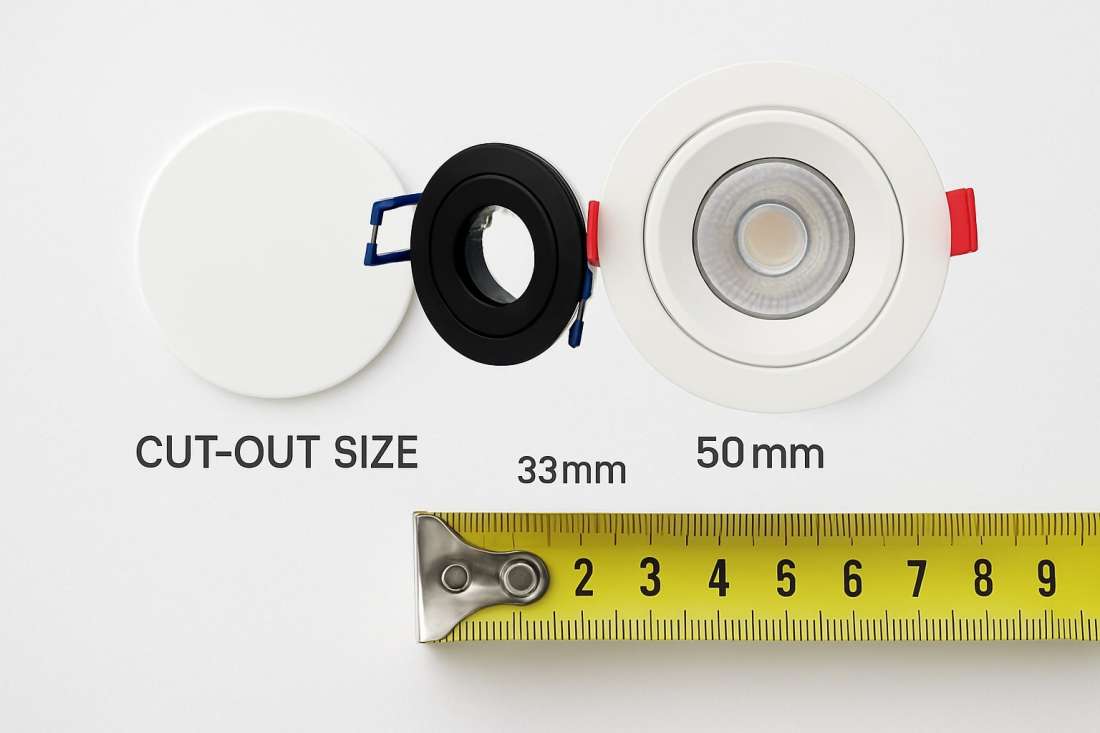
Cut-out size is one of the most important downlight measurements — and the most misunderstood. Many customers see “35mm” or “50mm” and assume it’s the size of the ceiling hole, but in most cases those numbers refer to the lamp face diameter (e.g. MR11 ≈ 35mm, MR16 ≈ 50mm) rather than the cut-out required by the downlight fitting.
In this guide we’ll explain exactly what cut-out means, how to measure it, and how to choose the correct downlight so you don’t end up with gaps, loose fittings, or a lamp that simply won’t fit.
What is “cut-out size”?
Cut-out size is the diameter of the hole in the ceiling (usually plasterboard) that the downlight body sits into. It’s normally shown in millimetres (e.g. 55mm, 72mm, 90mm) and is set by the downlight’s spring clips / fixing method.
Key point: two downlights can both use the same lamp type (for example GU10), yet require different cut-out sizes. Always check the product specification.
35mm vs 50mm: why people get it wrong
When you see 35mm or 50mm, it often refers to the lamp face diameter:
- 35mm lamps are commonly referred to as MR11 size (compact spotlight look).
- 50mm lamps are commonly referred to as MR16 size (standard spotlight look).
But the ceiling cut-out for the fitting may be larger than the lamp face because the fitting needs space for the body, clips and lamp holder. That’s why “50mm spotlight” does not automatically mean a “50mm hole”.
How to measure your existing cut-out (properly)
Option 1: measure the hole
- Turn off power to the circuit (and confirm it’s off).
- Remove the downlight trim if possible.
- Measure the diameter of the ceiling hole (a tape measure works; calipers are best).
Option 2: measure the fitting
If the fitting is already installed, the most reliable method is to remove it and measure the actual fitting’s required cut-out, or check the model/spec label.
Tip: also measure the ceiling void depth available above the plasterboard — some downlights are deeper than expected.
Typical downlight size ranges (UK)
Cut-out sizes vary by brand and fitting style, but these ranges help you understand what’s “normal”. Always confirm on the product page before you buy.
| Common type | Lamp face size | Typical cut-out range | Where it’s used |
|---|---|---|---|
| Mini downlights / compact spots | Often ~35mm look (MR11-style) | Commonly ~35–45mm (varies) | Hallways, alcoves, display lighting, tight ceilings |
| Standard spotlight downlights | Often ~50mm look (MR16/GU10-style) | Commonly ~65–80mm (varies) | Kitchens, lounges, bedrooms, general lighting |
| Larger LED downlights | Integrated LED (face varies) | Often ~90mm+ | Where higher output or a wider beam is needed |
See product specifications in our catalogue
What else to check (besides cut-out)
1) Depth / ceiling void
Some ceilings are shallow (especially in extensions, insulated ceilings, or where joists/pipework are close). Check the fitting depth and allow room for wiring and airflow where required.
2) IP rating (especially bathrooms)
If you’re fitting downlights in bathrooms or damp areas, you may need an IP-rated fitting (commonly IP44 or IP65 depending on zone and location). If you haven’t already, read our bathroom IP guide in the blog for a clear overview.
3) Fire rating
In some ceiling types and installations, fire-rated downlights (or suitable fire protection measures) may be appropriate. If you’re unsure what’s required for your property, a qualified electrician can advise.
Choosing the right downlight for your hole size
Use this quick decision path:
- If you already have a hole: match the new downlight’s cut-out range to your measured hole size.
- If you haven’t cut yet: choose your downlight first, then cut to the manufacturer’s recommended size.
- If you’re between sizes: don’t guess — pick a fitting designed for your exact cut-out range.
Can I “make it fit”?
It depends:
- Hole slightly too small: it may be possible to enlarge carefully, but do this only if you’re confident and the area above is clear.
- Hole too large: you’ll often need a fitting with a larger bezel/trim, a specific oversized trim, or to repair the ceiling. It’s usually better to choose the correct cut-out from the start.
Recommended next steps
- Read our GU10 vs MR16 vs MR11 vs GU11 guide if you’re still deciding which lamp format you need.
- If you’re planning a full room layout, check our blog for the downlight spacing guide to avoid dark spots and glare.
Ready to choose? Visit our products page and check the cut-out, depth and IP rating on the product specification before ordering.